
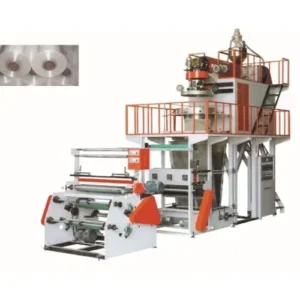
Equipo de Ingenieros: Maquinaria Plástica Evergreen
Evergreen Machine opera especialistas en maquinaria plástica desde China. Diseña líneas de producción completa con soporte técnico global y 15+ años.
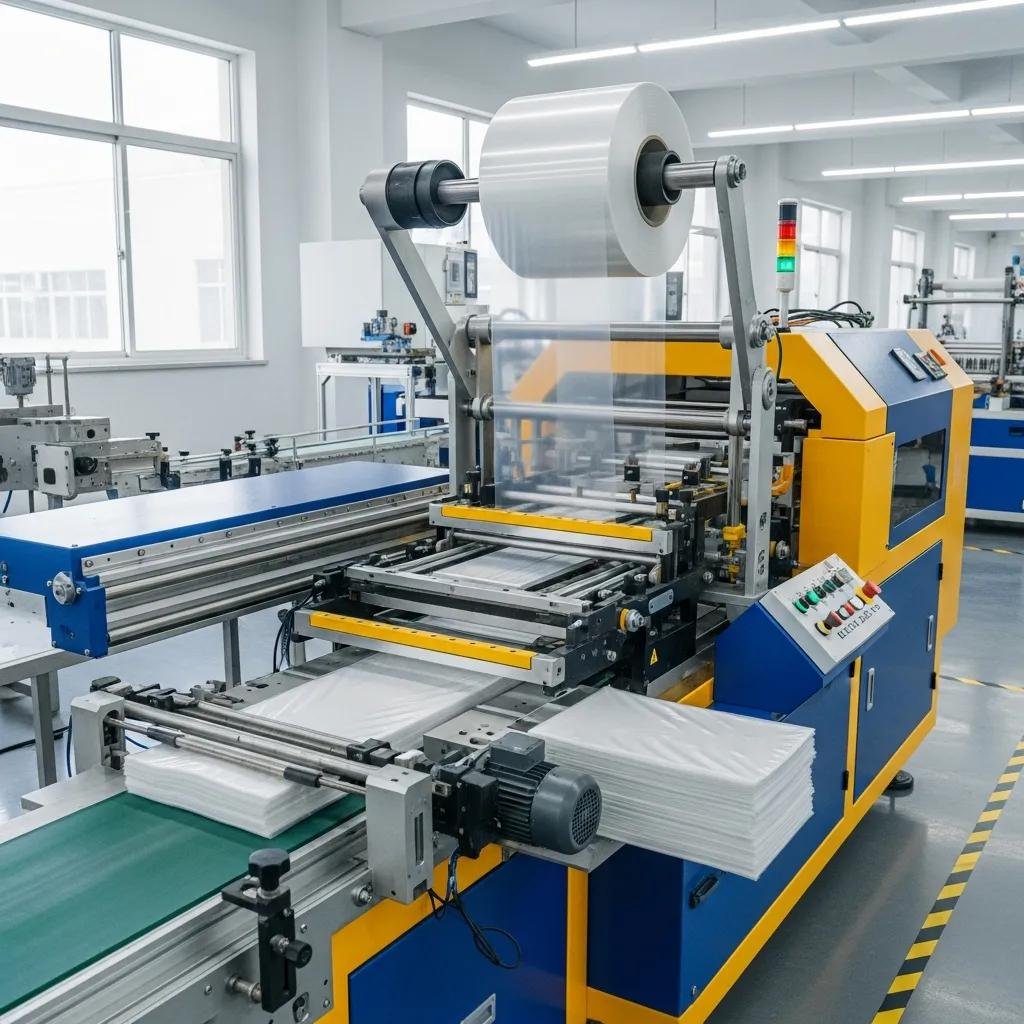
Bottom seal bag making machines produce sealed, load-bearing bags by forming film into tubes and creating a reinforced bottom weld that increases durability and resistance to puncture and load stress. This article explains how these machines work, which machine types best suit resistant packaging needs, and how material choices and advanced features influence final bag performance. Readers will learn step-by-step process mechanics—from film feeding and tube formation to bottom sealing—compare flat-bottom, gusseted, and block-bottom machines, and evaluate material options such as LDPE, HDPE, PP, and biodegradable films. The guide also reviews servo motor control, tension systems, and sealing technologies that improve consistency and throughput, and maps industry applications across food, pharmaceutical, chemical, industrial, and waste-management uses. Finally, practical selection criteria and an ROI-minded checklist help technical buyers match machine class to production volume, bag design, and material handling requirements. Throughout, relevant terms like bottom weld bagger, heavy duty bag making machine, and LDPE bag making machine are used to align technical decision-making with search intent and procurement considerations.
A bottom seal bag making machine is an industrial bag making system that converts rolled film into finished bags by feeding film, forming a tube, and creating a sealed bottom weld that gives the bag its load-bearing base. The mechanism produces a structurally reinforced bottom seam that distributes stress and increases puncture resistance, which is essential for garbage bags, industrial sacks, and packaging for heavy or abrasive goods. Typical machines operate across a range of cycle speeds and film thicknesses, with precision drive and tension control determining dimensional consistency and seal integrity. Understanding the machine’s modular functions is the first step toward choosing equipment that balances throughput, material compatibility, and seal strength.
A bottom seal bag making machine performs four core functions: film feeding, tube formation, bottom welding (sealing), and cutting/stacking, all coordinated to deliver consistent finished bags. Film feeding relies on rollers and tension control to present film without wrinkles; tube formation uses collars or former guides to shape a flat web into a cylindrical tube; the bottom sealing unit applies heat and pressure (or alternative sealing methods) to weld layers into a durable bottom seam; and cutting or perforating modules separate individual bags or produce bag-on-roll formats. These modular functions work together under PLC or servo control to maintain cycle timing and reduce scrap. This functional breakdown clarifies why maintenance on any one module—feed rollers, sealing jaws, or cutter blades—directly impacts overall yield and final bag quality.
The bag-making sequence proceeds through controlled stages where process parameters determine defect rates and mechanical performance. First, film feeding sets web tension and alignment to avoid wrinkles or mis-registration; incorrect tension causes seal failures and dimensional drift. Second, tube formation shapes the web while controlling fold depth for gussets or flat-bottom geometries; improper forming causes uneven seals or weak corners. Third, bottom sealing applies calibrated temperature, pressure, and dwell time (or uses ultrasonic/impulse methods) to create a weld that meets required tensile and puncture thresholds; seal defects commonly arise from incorrect temperature, contaminated film, or worn sealing surfaces. Operators monitor tension, temperature, and cycle speed as key quality controls; effective SOPs for these parameters reduce scrap and increase uptime, and the next section explores machine types that specialize in resistant bag production.
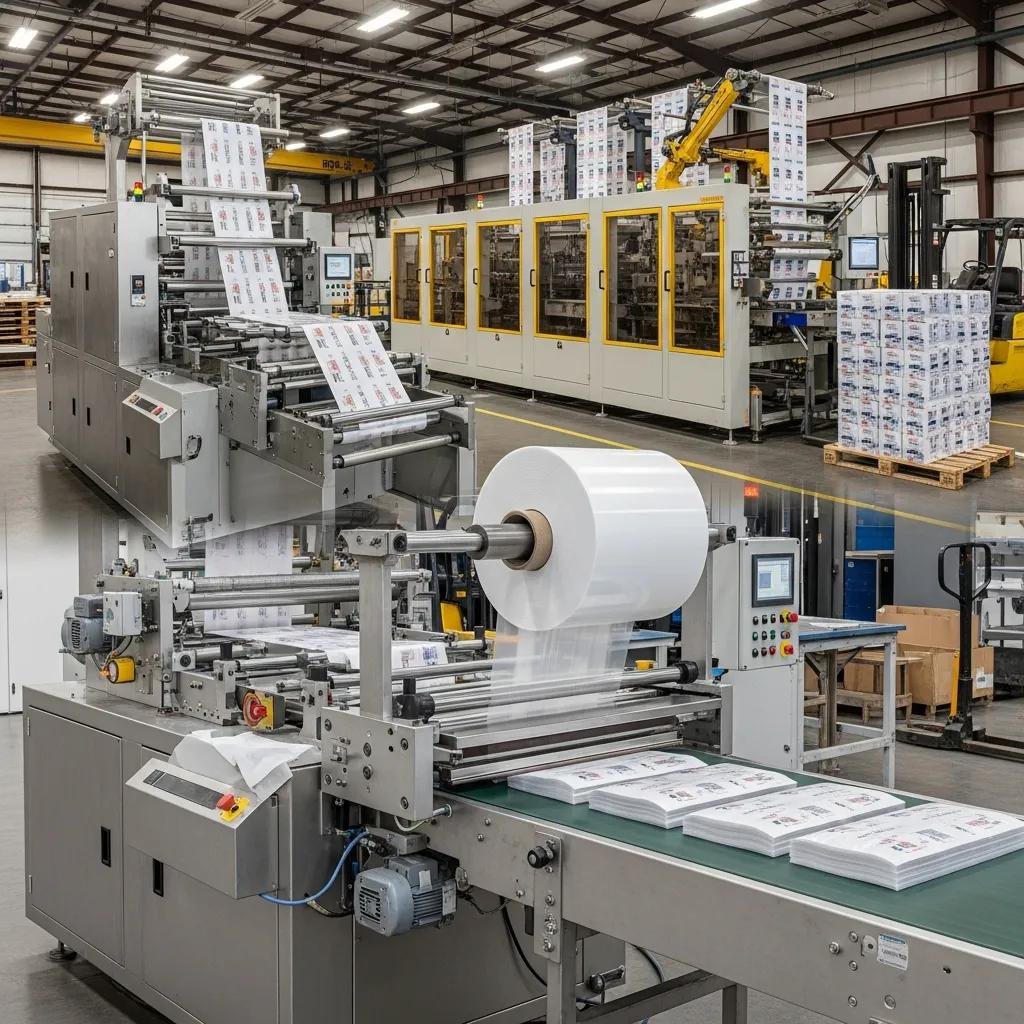
Different bottom seal bag machine designs are optimized for specific resistance needs: flat-bottom machines for simple load distribution, gusseted bottom machines for expanded capacity and tear control, and block-bottom machines for stackability and rigid base performance. Choosing among flat-bottom, gusseted, and block-bottom hyponyms depends on factors such as expected load profile, required stackability, and sealing complexity. Heavy-duty variants add torque, reinforced sealing units, and thicker-film handling capability to address industrial and waste-management applications. Below, a comparative table maps machine types to key attributes and best applications to help technical buyers match machine class to product requirements.
| Machine Type | Key Attributes (speed, max thickness, gusseting/block capability) | Best Applications |
|---|---|---|
| Flat-bottom bag machine | Moderate speed; handles thin-to-medium gauges; simple sealing | General-purpose garbage bags, retail liners |
| Gusseted bottom bag machine | Moderate speed; supports side gussets; better volume capacity | Food packaging, produce bags, flexible industrial sacks |
| Block-bottom bag machine | Lower speed; supports block-bottom formation and higher thickness | Stackable sacks, cement/chemical liners, heavy goods |
Flat-bottom machines produce simple sealed bases that are easy to run at higher speeds and suit many standard waste and retail bag formats; they are hyponyms of broader bag making machinery aimed at volume. Gusseted machines add side folds that increase capacity and reduce lateral stress on seals, improving tear resistance under distributed loads. Block-bottom machines create a rectangular base that increases stackability and stability for palletized goods, but they require more complex folding and sealing sequences and often run at lower top speeds. Each design affects sealing complexity, required forming hardware (meronyms such as gusseting unit and forming collar), and the appropriate film properties; selecting between them requires matching mechanical design to intended load and handling conditions.
Heavy duty machines combine high-torque drives, reinforced sealing jaws, and stronger frame construction to process thicker films (higher gauge LDPE/HDPE) while sustaining uptime under continuous operation. High-speed variants emphasize rapid cycle rates, precise servo motor control, and automated film handling to reduce downtime and scrap rates; throughput examples range by class, but the consistent theme is balancing speed with seal integrity. Maintenance considerations for these machines prioritize accessible wear parts, simple alignment procedures, and robust tension control systems to avoid frequent interruptions. For industrial buyers, uptime, spare-parts availability, and predictable maintenance windows are as important as raw cycle rate when calculating lifecycle cost and effective output.
Bottom seal bag machines accept a range of thermoplastic films—LDPE, HDPE, PP (polypropylene), and modern biodegradable films—each offering different trade-offs in flexibility, puncture resistance, and barrier properties. Material selection affects sealing temperature, dwell time, and tension settings; for example, LDPE generally requires lower sealing temperature and allows greater elongation, while HDPE offers higher tensile strength but lower elongation and needs different heat-seal parameters. Below is an EAV-style comparison that helps match film properties to bag types and machine adjustments for resistant packaging.
| Material | Property (strength, puncture resistance, barrier) | Suitable Bag Types / Machine Adjustments |
|---|---|---|
| LDPE | Flexible, high elongation, good puncture resistance | Garbage bags; reduce sealing temperature and increase dwell time slightly |
| HDPE | High tensile strength, lower elongation, stiffer | Thin retail liners, chemical sacks; increase sealing pressure and optimize cutter timing |
| PP (Polypropylene) | Good stiffness and clarity, moderate strength | Retail packaging and food pouches; adjust temperature and use higher-pressure seals |
| Biodegradable films | Variable strength; often blended for toughness | Compostable liners; tune tension control and test seal integrity per batch |
LDPE films combine flexibility and tear resistance, which helps absorb point impacts without immediate puncture; this makes LDPE a common choice for garbage bag making and heavy-duty liners when run at adequate gauge. HDPE delivers higher tensile strength and lower elongation, producing stiffer bags that resist stretching under steady loads, but HDPE may require more precise sealing pressure to avoid cold-bonded seams. PP is useful where clarity and stiffness are desired, often in retail-facing packaging that still needs reasonable mechanical resistance. Biodegradable films can meet sustainability goals but require stringent compatibility checks—sealing windows and tensile profiles differ by formulation, so tension and temperature settings must be validated for consistent bottom welds.
Key properties that determine bag resistance include puncture resistance (measured in grams or newtons by standardized tests), tensile strength (break force), elongation at break (percentage), and barrier performance against moisture or chemicals. Puncture resistance predicts how a bag performs against sharp objects and is improved by blends, reinforcement layers, or increased gauge. Tensile strength and elongation together determine whether a bag will stretch and redistribute loads or snap under stress; higher elongation helps in shock absorption, while higher tensile strength supports sustained loads. Machine adjustments—such as seal temperature, pressure, and tension control—must be optimized for each material to achieve the desired combination of strength and flexibility.
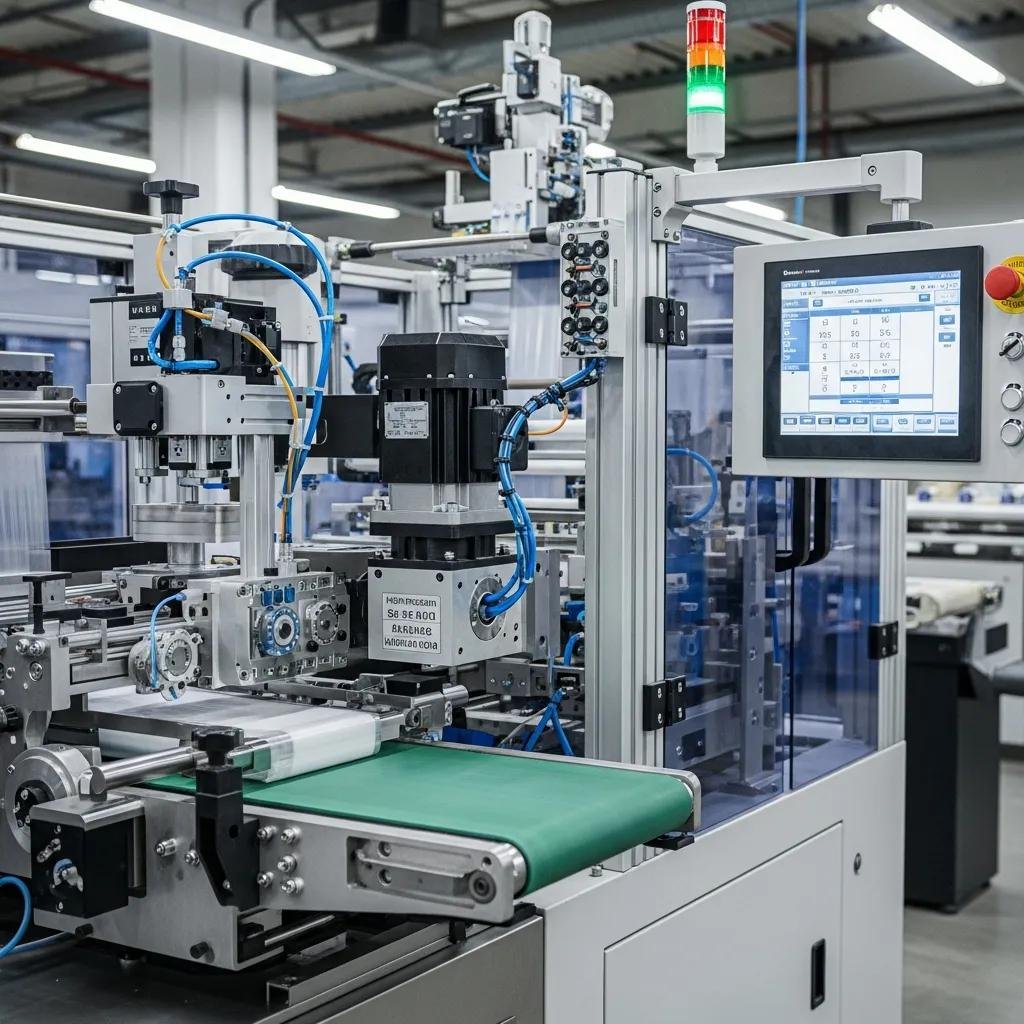
Advanced components and automation features dramatically improve bag quality, reduce scrap, and raise effective throughput in bottom seal machines. Features like servo motor control, closed-loop tension systems, and precision sealing units enable tighter dimensional tolerances and consistent weld strength. Automation can include film splicing, automatic film index, and inline counting or bag stacking that lower labor needs and reduce human error. The table below maps key features to technical roles and the practical benefits they deliver on the production floor.
| Feature | Technical Role | Practical Benefit |
|---|---|---|
| Servo motor control | Precise indexing and speed control | Lower variation, faster changeovers, reduced scrap |
| Tension control system | Maintain consistent film tension | Improved seal quality and dimensional consistency |
| Heat sealing unit (optimized) | Controlled temperature/pressure/dwell | Stronger, repeatable bottom welds |
| Automation (splicing, stackers) | Reduce manual handling and downtime | Higher effective uptime and lower labor cost |
Servo motors deliver repeatable positioning and rapid acceleration/deceleration profiles that reduce dimensional variation when forming and sealing bags, directly lowering scrap rates and improving bag-to-bag consistency. Coupled with closed-loop tension systems, servo control maintains web stability across acceleration and deceleration phases, which is especially important when running variable-gauge films or performing high-speed indexing. These systems also simplify recipe-based changeovers: operators can store tension and speed profiles for specific materials, reducing setup time. Proper maintenance and calibration of servo encoders and tension sensors preserve long-term precision and are a worthwhile investment for heavy-duty bag making operations.
Choosing between heat sealing, impulse sealing, ultrasonic welding, or cold cutting depends on film type, cycle speed, and desired seal characteristics; heat sealing yields strong bonds for many polyolefins, while ultrasonic methods can produce clean, strong seals for multilayer or specialty films. Cold cutting methods reduce thermal degradation for heat-sensitive films but may require mechanical sealing aids to ensure leakproof bottoms. Automation technologies—such as automatic film splicers, turret stackers, and inline inspection systems—reduce manual intervention and detect defects early, lowering waste. One practical example: integrating inline seal inspection with servo-driven indexing can reject defective bags before packing, preserving downstream packaging quality and reducing customer complaints.
Bottom seal bags serve diverse sectors where resistance requirements vary from barrier and hygiene to puncture resistance and chemical compatibility. In food and pharmaceutical contexts, barrier properties and cleanliness dominate; in chemical and industrial uses, chemical resistance and mechanical strength are prioritized; in waste management, puncture resistance and drawtape options drive design. The following subsections map these applications to typical design drivers and production considerations so engineers and procurement teams can align bag specifications with regulatory and performance needs.
Food and pharmaceutical packaging require materials and processes that maintain sanitary conditions and barrier performance; sealing integrity and low particulate generation during bag making are essential, and selection of suitable films and clean-room-compatible accessories matters. Chemical packaging demands films and seals resistant to the product’s solvents or reactive agents, often necessitating compatibility testing and thicker gauges. Industrial packaging for granular or abrasive goods focuses on puncture resistance and reinforced bottoms to handle point-loads. Across these sectors, production volumes and regulatory requirements—such as traceability and lot control—shape machine selection and the need for integration with downstream systems like metal detectors or seal inspectors.
Garbage bag manufacturing emphasizes puncture resistance, tensile strength, and optional features like drawtape, perforation, or odor-blocking additives, tailored to municipal, commercial, or medical waste streams. Typical gauge ranges vary by application: heavy-duty waste bags use higher microns and may incorporate reinforcement or multi-layer coextrusion to improve toughness, while standard household liners run at lower gauges to optimize cost. Production lines for garbage bags require robust cutters and spool handling systems to deliver roll formats or interleaved stacks reliably. Design choices such as adding drawtape or using star-seal bottoms influence sealing complexity and therefore machine configuration during purchase.
Selecting the correct bottom seal bag making machine involves matching throughput requirements, bag type complexity, and material compatibility to machine class, while factoring in CAPEX, maintenance, and expected ROI. A structured decision framework considers daily or monthly production volume, whether bags require gussets or block-bottoms, film gauge range, and automation preferences such as servo control or inline inspection. Below is a practical checklist and decision matrix to guide buyers through key criteria and to estimate payback from automation and reliability improvements.
The following checklist guides machine selection and prioritization:
Match machine throughput to production targets: low-volume lines favor simpler, lower-cost machines, while higher-volume operations require heavy-duty or high-speed models with automation to maintain yield. Bag complexity—such as gussets or block bottoms—affects cycle time and forming hardware; machines with modular forming stations simplify upgrades. Material compatibility requires verifying maximum gauge capacity, sealing temperature ranges, and tension system adequacy to handle LDPE, HDPE, PP, or biodegradable blends; request machine recipes or validation runs to confirm performance with your chosen film. A simple throughput-size mapping helps: small (≤50 bags/min), medium (50–150 bags/min), large (>150 bags/min) as a procurement starting point, with appropriate machine classes aligned to each tier.
CAPEX decisions should weigh automation payback, reduced labor costs, and scrap reduction—features like servo control and automatic splicing often return value through lower defect rates and faster changeovers. Lifecycle costs include maintenance, spare parts (belts, sealing jaws, cutters), and expected downtime; budgeting spare parts at a percentage of CAPEX per year improves reliability planning. Service and support matter: machines designed for easy access to wear parts and with clear adjustment recipes reduce skilled labor dependency. Finally, calculate a simple ROI example by estimating increased effective throughput and reduced scrap after automation; these figures typically justify selecting higher-feature machines for medium-to-high production volumes.
Evergreen Machine opera especialistas en maquinaria plástica desde China. Diseña líneas de producción completa con soporte técnico global y 15+ años.
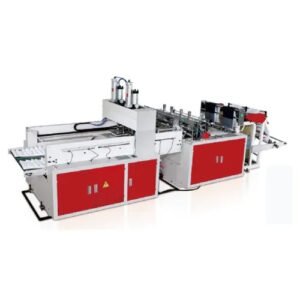
Evergreen Machine fabrica equipos especializados para bolsas plásticas con tecnología moderna. Extrusoras y bolseadoras de precisión industrial.
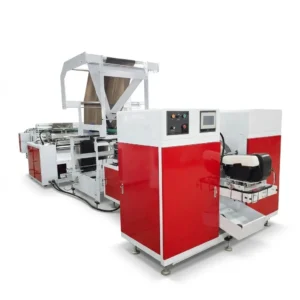
Guía profesional para seleccionar máquinas de producción plástica. Evalúa capacidad, materiales y soporte técnico con bolseadora.com.mx.
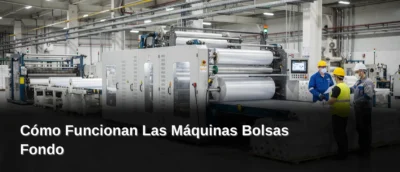
Descubre cómo funcionan las máquinas bolsas de fondo. Sellado térmico, corte automático y apilado para bolsas industriales de calidad en bolseadora.com.mx.