
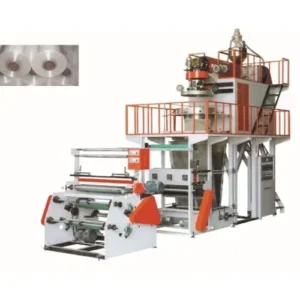
Equipo de Ingenieros: Maquinaria Plástica Evergreen
Evergreen Machine opera especialistas en maquinaria plástica desde China. Diseña líneas de producción completa con soporte técnico global y 15+ años.
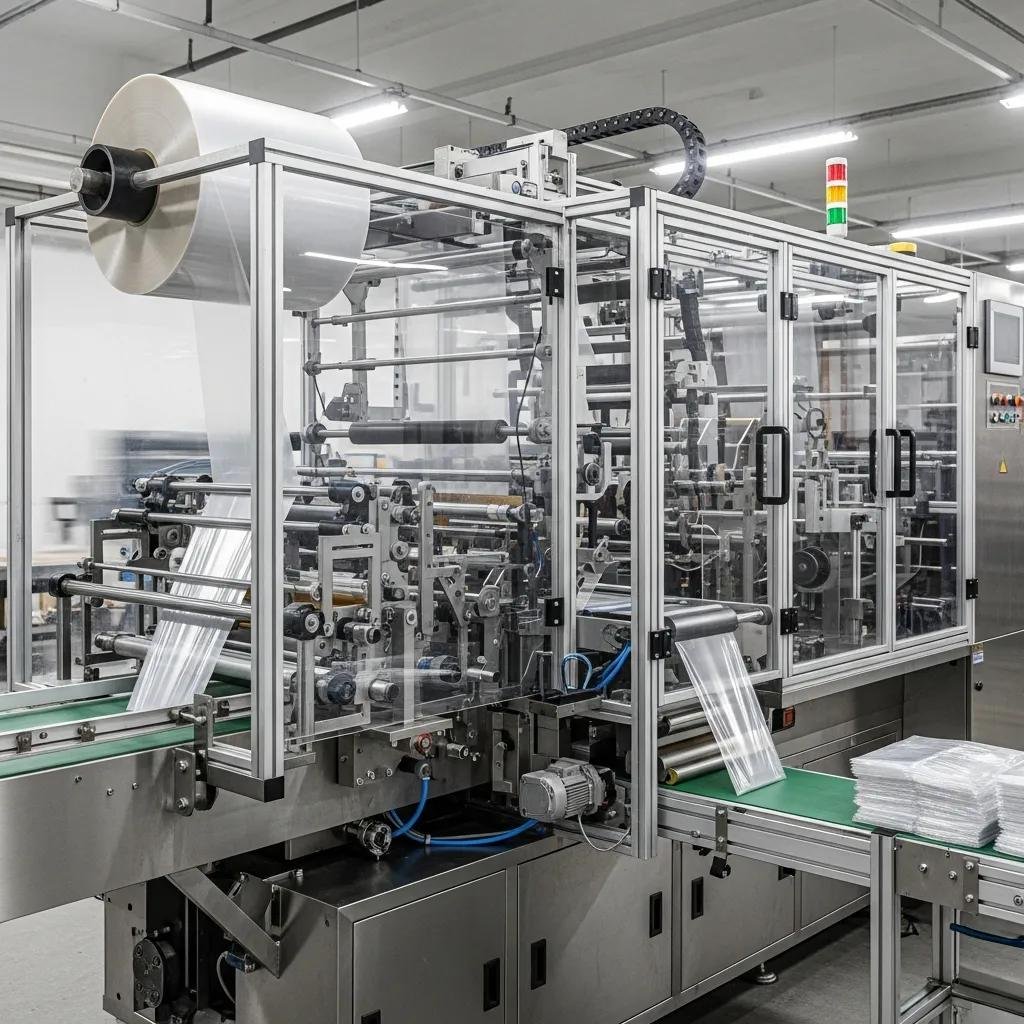
Cellophane bag making machines produce clear, protective packaging that showcases products while preserving freshness and providing tamper evidence. This article explains how automatic and custom cellophane solutions work, the operational advantages they bring to packaging lines, and how to match machine classes to industry requirements such as food, pharma, and cosmetics. Readers will learn about machine mechanics (PLC, servo drives, sealing modules), film compatibility (cellophane, BOPP, PET, PVC), and practical procurement and maintenance strategies to protect throughput and return on investment. The guide also compares automatic, semi-automatic and small-scale options, details converting and finishing capabilities, and highlights current trends like automation, sensor-driven quality control, and sustainable films. By the end you will have a clear framework for selecting, configuring, and maintaining transparent packaging machinery that balances speed, product visibility, and regulatory compliance.
Automatic cellophane bag making machines are integrated packaging systems that form, seal, and cut transparent bags from rollstock film at high throughput while maintaining consistent seal quality. They operate using synchronized film feeding, servo-driven motion, and PLC controls to translate film into finished bags with precise dimensions and repeatable sealing parameters. The primary benefits are increased packaging speed, consistent presentation that preserves product visibility, reduced manual labor, and improved tamper-evidence through controlled seals and optional tear features. These advantages make automatic machines ideal for medium-to-high volume production environments where presentation and speed are critical.
Automatic, semi-automatic and overwrapper categories serve different operational scales and budgets; vendors typically differentiate on speed ranges, precision controls, and service offerings for integration. Below is a concise comparison of machine classes to guide selection between full automation and lower-capex alternatives.
| Machine Class | Characteristic | Typical Value |
|---|---|---|
| Automatic cellophane bagger | Packaging speed | 40–300+ bags/min depending on model and lanes |
| Semi-automatic bagger | Material compatibility | Works with cellophane, BOPP, PET, PVC; operator-assisted feeding |
| Manual/hand sealer or small overwrapper | Ideal use case | Low-volume runs, sampling, pilot production |
This table clarifies where each machine class fits operationally and helps buyers decide whether automation pays off based on expected volumes and labor trade-offs. Understanding those trade-offs leads directly into how automation improves line efficiency and reduces waste.
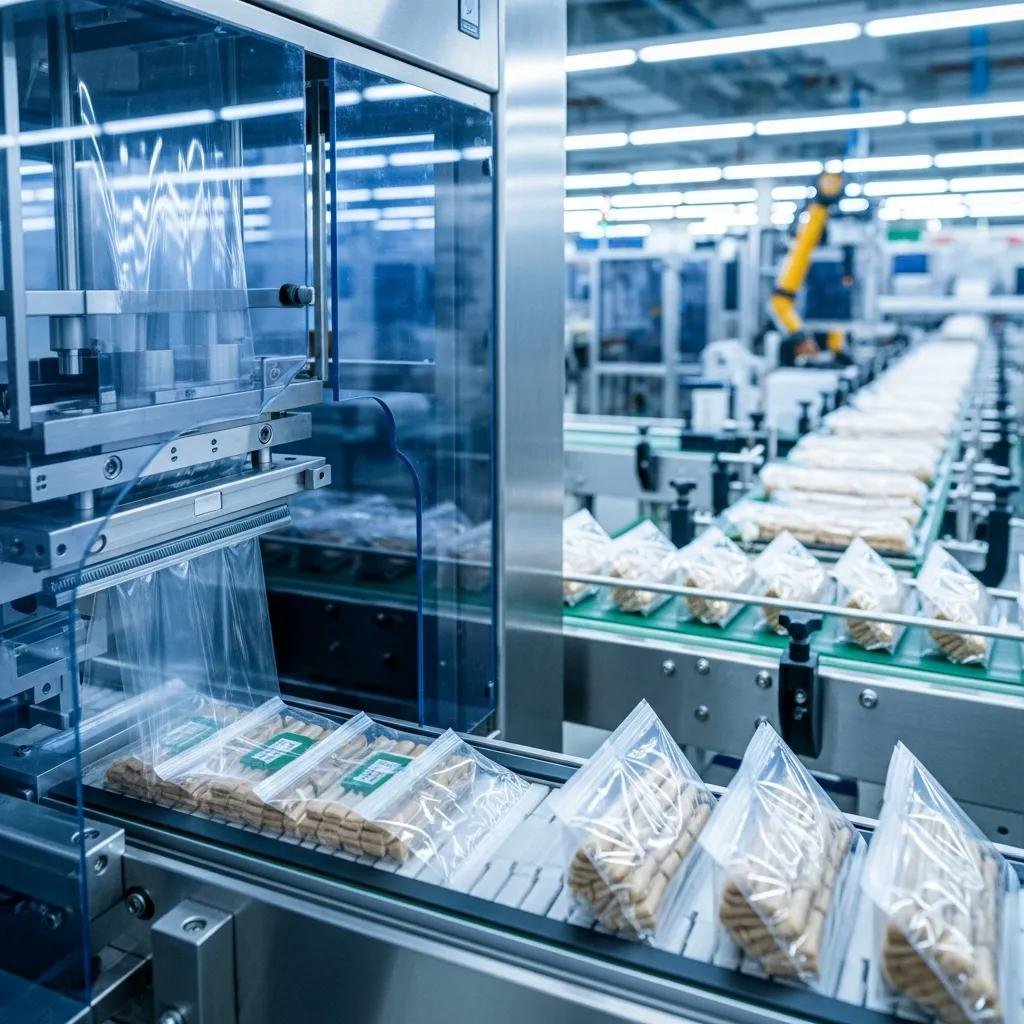
Automatic cellophane baggers enhance efficiency by combining high-speed film handling with precise motion control, minimizing cycle times while maintaining quality. Servo drives synchronize cutting, sealing, and indexing so multi-lane feeding can multiply throughput without sacrificing seal integrity or bag alignment. The result is measurable improvements in bags per minute, reduced film waste through accurate tension control, and fewer stoppages thanks to integrated diagnostics and recipe-based PLC controls. For example, a servo-driven multi-lane bagger can double throughput compared to a single-lane system while keeping changeovers short through quick-change tooling.
These efficiency gains also reduce labor dependency and free operators for quality checks and finishing tasks, which in turn improves overall equipment effectiveness (OEE). The next section outlines specific high-speed and customization features that enable those improvements and how they affect changeover and maintenance planning.
High-speed and customizable cellophane bag machines combine advanced controls, robust mechanical design, and modular tooling to meet diverse product formats and run lengths. Core features include PLC recipe control for storing bag specs, servo motors for precise motion and indexing, multi-lane infeed options to scale throughput, and quick-change tooling that reduces changeover times to minutes rather than hours. Additional options like integrated printing, label application, and vision inspection allow customization of presentation and traceability without adding manual steps.
Performance trade-offs center on complexity versus flexibility: higher-speed, multi-lane systems offer greater throughput but require more sophisticated maintenance and commissioning, while modular customization enables phased investment and future scalability. Understanding these trade-offs helps operations plan for capacity growth and product mix changes.
Different industries require distinct machine attributes—food demands hygiene and washdown capability, pharma emphasizes tamper evidence and validation, and cosmetics prioritize visual presentation and finishing. Matching machine type to industry use requires mapping regulatory needs, throughput, and aesthetic expectations to equipment families such as overwrappers, form-fill-seal pouchers, and box overwappers. Cleanability, material choices, and documentation for validation determine whether a packaging solution is suitable for regulated environments.
Below is a practical industry-to-machine mapping to help buyers quickly identify suitable equipment classes and key required features for compliance and presentation.
This mapping shows how machine selection balances protection, compliance, and presentation requirements across sectors and prepares the reader to evaluate features like cleanroom compatibility and documentation support.
| Industry | Recommended Machine Type | Key Required Features |
|---|---|---|
| Food | Overwrapper / HFFS | Washdown design, HACCP compatibility, stainless surfaces |
| Pharma | Poucher / FFS | Tamper-evidence, traceability, validation documentation |
| Cosmetics | Box overwrapper / overfold | High-accuracy presentation, print/finish integration |
The table demonstrates how industry constraints and presentation needs should directly influence machine class choice and integration plans. Considering these requirements leads to a closer look at specific machine recommendations and QA measures for each sector.
Selecting the best cellophane wrapping machine for a given sector depends on speed, hygiene standards, and finishing needs; food producers prioritize washdown and food-contact-safe materials, pharma requires validated control and tamper-proof seals, and cosmetics seek superior finish and printing integration. Machines for food should allow easy disassembly for cleaning and be built from corrosion-resistant materials. Pharmaceutical lines should include traceable sealing parameters and optional vision systems for package inspection to satisfy regulatory auditors.
Choosing a machine family with modular add-ons—such as detachable hygiene guards or vision inspection—lets manufacturers adapt the base machine to stricter requirements without replacing the entire line. That adaptability reduces capital expense while ensuring compliance and high presentation quality in each industry context.
Transparent packaging machines ensure product safety and tamper evidence through controlled sealing systems, consistent heat and dwell profiles, and integration with inspection technologies like vision or seal-strength testers. Common tamper-evident approaches include hermetic seals, tear tabs, and visible integrity indicators that are consistent across production runs thanks to PLC-managed recipes. Inline inspection systems verify seal continuity, print quality, and package presence, triggering automatic rejection of nonconforming items.
These QA integrations improve traceability and reduce the risk of compromised packages reaching consumers; combining robust sealing mechanics with automated inspection supports both safety objectives and regulatory documentation needs. Ensuring these capabilities during procurement is essential and naturally leads to material compatibility considerations in machine selection.
Flexible transparent packaging machinery adapts to film types through adjustable temperature control, variable dwell time, tension management, and specialized sealing jaws that handle different melting points and seal properties. Machines use configurable PLC recipes to store optimal settings per film, and servo tensioning systems maintain web tracking for consistent prints and seals. Proper machine adjustments reduce film wrinkles, seal defects, and waste while ensuring the final package meets aesthetic and barrier requirements.
Material compatibility also depends on converting processes—slitting, printing, and rewinding—that prepare rollstock to machine-ready specifications and affect final recyclability and sustainability. The interplay between machine settings and film characteristics determines whether a production line can switch between cellophane, BOPP, PET or PVC with minimal downtime.
Before the table below, consider the following film comparison to plan machine adjustments and sustainability trade-offs.
| Film Type | Thickness Range (µm) | Machine Adjustments |
|---|---|---|
| Cellophane | 18–40 µm | Moderate sealing temp, low stretch, careful tension control |
| BOPP | 20–60 µm | Higher heat-seal temperatures, stronger jaws, higher tension |
| PET | 12–50 µm | Requires specific seal coatings or adhesives for good seals |
This comparison highlights practical machine adjustments and shows why knowing film specs before commissioning is critical to reducing start-up waste and ensuring consistent package quality. Understanding these adjustments prepares product teams to choose the right converting steps for sustainability and performance.
Flexible packaging machines commonly accept cellophane, BOPP, PET, and PVC films, with compatibility determined by thickness, sealability, and tensile properties. Cellophane offers excellent clarity and biodegradability in some formulations but requires precise temperature control due to lower melting points. BOPP provides strong seals and printability for retail packaging, while PET delivers higher strength and barrier properties; PVC remains an option for some visual-heavy applications though recyclability varies.
Matching film to machine requires specifying thickness ranges and sealing module capabilities in procurement documents, which prevents incompatibility at installation and reduces costly retrofits. These material considerations naturally lead to questions about converting technologies that condition rollstock for optimal performance.
Film converting technologies—such as slitting, printing, coating, and laminating—refine rollstock into machine-ready web widths and surface properties that enhance sealability, print alignment, and recyclability. Precision slitting reduces edge defects and enables multi-lane infeed; digital or flexo printing adds brand visuals while coating or lamination improves barrier properties and seal performance. Sustainable choices, like selecting biodegradable cellophane formulations or mono-material constructions, influence downstream recyclability and may require machine adjustments to handle different heat or stretching behavior.
Implementing the right converting steps upstream of the bagger reduces on-line waste and improves first-pass yield, but buyers must weigh sustainability gains against potential trade-offs in barrier performance or cost.
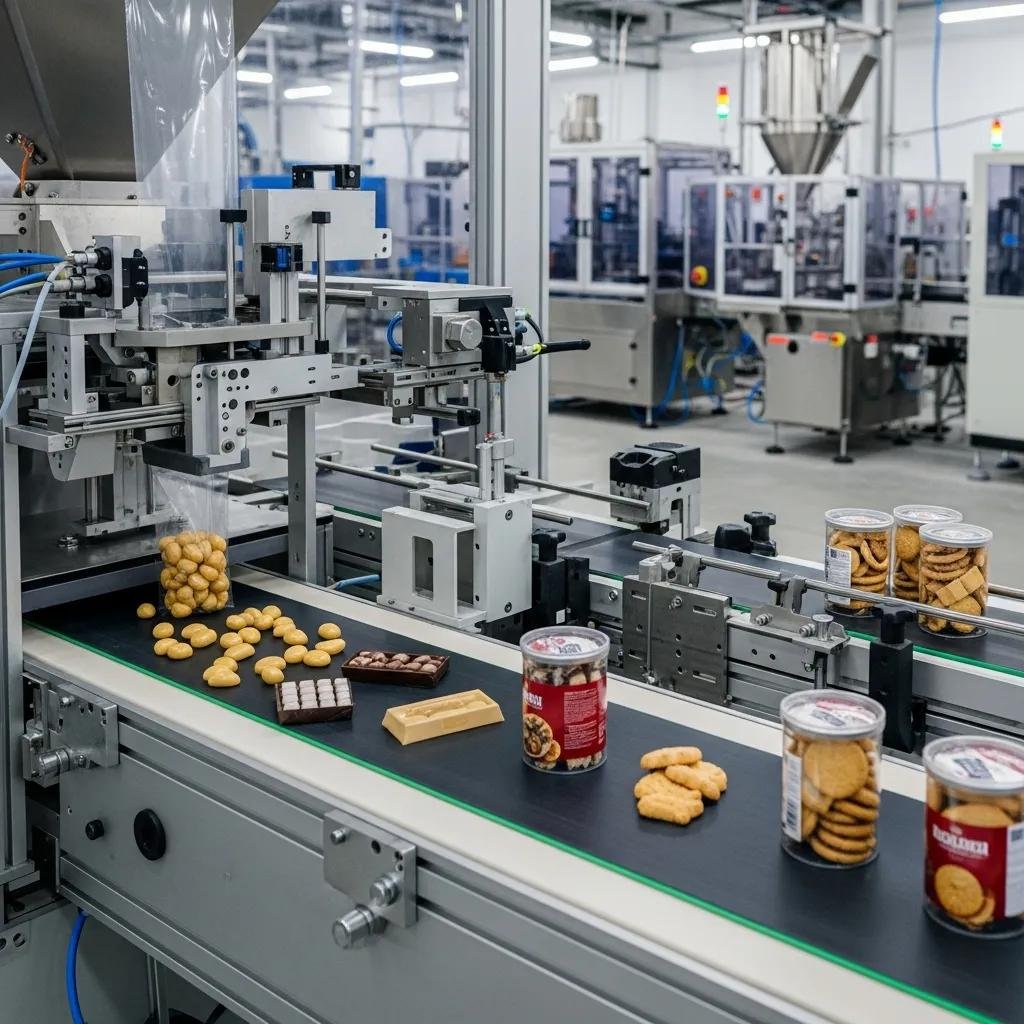
Custom cellophane bagging solutions combine tailored tooling, modular line components, and optional finishing such as printing, labeling, and tear tape to meet specific product dimensions and branding requirements. Customization can involve bespoke film guides, adjustable forming tubes, and dedicated feeding systems for odd-shaped items, enabling manufacturers to package unique SKUs without compromising speed. Modular architectures allow future upgrades—adding lanes, integrating vision systems, or accommodating new film types—so lines can evolve with product portfolios.
Planning custom solutions begins with clear specifications for dimensions, run lengths, and expected SKU changes; that planning informs tooling costs and changeover procedures. These customization choices pave the way to mechanical design details like quick-change tooling and multi-format recipes, which are discussed next.
Customization for product dimensions uses adjustable guides, interchangeable forming tooling, and servo-driven registration to change bag length, width, and gusseting quickly and reproducibly. Quick-change tooling systems reduce downtime by enabling rapid swapping of dies and jaws, and recipe-based PLCs recall settings for each SKU to speed changeovers. For volume scaling, multi-lane infeed or parallel indexing increases throughput while preserving consistent seals and registration.
Designing customization with future scalability in mind reduces capex risk and shortens commissioning time when new products launch, which aligns procurement and operations toward long-term productivity.
Semi-automatic and small-scale baggers offer lower initial capital cost, simpler maintenance, and flexibility for low-volume producers, pilot runs, and artisanal brands that require manual oversight of product placement. These machines are easier to commission, require less specialized training, and can support product development cycles where frequent format changes occur. Limitations include lower throughput and higher per-unit labor, but advantages include affordability and the ability to validate package formats before investing in full automation.
For many small manufacturers, semi-automatic systems serve as an effective stepping stone toward modular automation, allowing teams to refine packaging specs and demand forecasts before committing to higher-speed equipment.
Choosing and maintaining cellophane bag machines requires balancing throughput needs, film compatibility, footprint constraints, OEE goals, and after-sales support to ensure ongoing performance and ROI. Procurement should start with a clear production profile—daily output targets, SKU mix, and future growth expectations—and include specifications for film types, sealing methods, and required integrations like printing or vision inspection. Maintenance planning must encompass preventive schedules, critical spares, training, and defined response times for service contracts to reduce downtime risk.
The checklist below provides decision factors and minimum expectations buyers should request from suppliers when evaluating proposals.
This checklist helps procurement teams compare vendors on objective criteria and leads directly into a more detailed procurement table summarizing minimum recommendations.
| Procurement Attribute | Recommended Minimum | Rationale |
|---|---|---|
| Warranty period | 12 months | Protects against early failures and supports commissioning |
| Spare parts lead time | 1–2 weeks for critical items | Minimizes extended downtime risk |
| Service options | Remote diagnostics + scheduled preventive visits | Ensures fast troubleshooting and uptime |
Selection factors should include production volume, film compatibility, desired OEE, available floor space, required integrations (printing, vision), and industry compliance needs. For low-volume operations, semi-automatic machines may be appropriate, while high-volume lines benefit from servo-driven multi-lane automation and recipe-based controls. Validate film behavior on candidate machines and request performance data such as typical bags per minute and first-pass yield percentages.
Asking vendors for trial runs on representative products and for clear documentation of training and spare parts policies reduces procurement risk and ensures the selected machine satisfies both current and near-term future requirements.
Best practices include establishing a preventive maintenance calendar with daily checks, weekly lubrication and seal inspection, monthly servo and sensor calibration, and annual full-system audits; these actions reduce unplanned downtime and prolong component life. Maintain an inventory of critical spares—sealing jaws, temperature sensors, drive belts—and document common failure modes with troubleshooting flows to speed repairs. Additionally, secure a service agreement that includes remote diagnostics, prioritized site visits, and documented response times to align vendor incentives with your uptime goals.
Routine training for operators and a clear escalation path for technical issues complete a maintenance program that preserves throughput and protects ROI.
Recent trends in cellophane packaging machinery center on greater automation, sensor-driven quality control, and sustainability-focused materials and drives. Industry 4.0 capabilities such as IoT-enabled monitoring, recipe management, and predictive maintenance analytics reduce downtime and improve OEE by moving from reactive repairs to condition-based servicing. Advances in servo and energy-efficient drives lower power consumption and improve responsiveness for multi-format lines.
Beyond automation, innovations in sustainable films—biodegradable cellophane and mono-material approaches—are prompting machine suppliers to adjust sealing modules and tension profiles to handle new materials without sacrificing seal integrity. The following list summarizes key trends shaping investment decisions.
These trends influence procurement priorities and operational upgrades, and they point to a future where transparent packaging machines are both smarter and greener.
Automation and smart technology are enabling packaging lines to collect operational data, automate recipe changes, and predict maintenance needs, which improves throughput and reduces unplanned stoppages. PLC/SCADA integration allows centralized control of multiple machines and easier changeovers via stored recipes, while IoT telemetry and analytics enable data-driven decisions on maintenance and production planning. The measurable benefits include higher OEE, fewer quality escapes, and faster troubleshooting through remote diagnostics.
Embracing these capabilities requires planning for cybersecurity, training, and data governance, but the operational gains make smart upgrades a compelling option for manufacturers aiming to stay competitive.
Sustainability advances include biodegradable cellophane formulations, mono-material film designs for easier recycling, and machine-level energy savings through servo-driven, regenerative systems. Biodegradable cellophane offers an eco-friendly alternative but may necessitate adjustments in sealing temperature and dwell time; mono-material approaches simplify recycling but may limit certain barrier properties. Manufacturers must weigh certifications and practical recyclability against product protection needs.
Adopting sustainable films often involves collaboration between converters, machine suppliers, and product teams to validate performance while minimizing production disruption, making pilot trials and machine adaptability vital to successful implementation.
Evergreen Machine opera especialistas en maquinaria plástica desde China. Diseña líneas de producción completa con soporte técnico global y 15+ años.
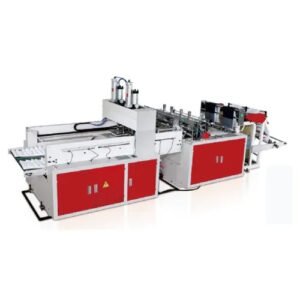
Evergreen Machine fabrica equipos especializados para bolsas plásticas con tecnología moderna. Extrusoras y bolseadoras de precisión industrial.
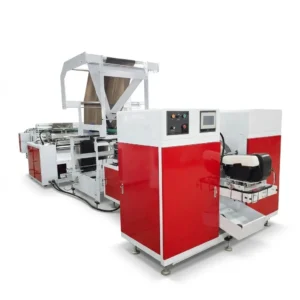
Guía profesional para seleccionar máquinas de producción plástica. Evalúa capacidad, materiales y soporte técnico con bolseadora.com.mx.
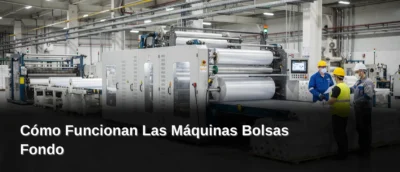
Descubre cómo funcionan las máquinas bolsas de fondo. Sellado térmico, corte automático y apilado para bolsas industriales de calidad en bolseadora.com.mx.